Stellenbosch · Western Cape
Jacobsdal Wine Estate
Jacobsdal Wine Estate is a wine farm in Stellenbosch, Western Cape. About 28 km from Cape Town.
Stellenbosch · Western Cape
Jacobsdal Wine Estate is a wine farm in Stellenbosch, Western Cape. About 28 km from Cape Town.
Jacobsdal Wine Estate occupies a distinctive corner of the Stellenbosch Valley wine-route map: the extreme south-westerly edge of the Stellenbosch Wine of Origin region, between Stellenbosch and Kuils River, on hillsides that look toward False Bay less than ten kilometres away. It is not a polished tourism plaza. It is a multi-generation Dumas family farm whose official identity rests on one idea — handmade is well made — and on Pinotage and Cabernet Sauvignon crafted with unusually traditional cellar methods.
Official estate copy states that the Dumas family has made wine at Jacobsdal for three generations. Present owner and winemaker Cornelis Dumas works with his son Hannes, who is positioned to take over in time. Cornelis’s path into the cellar was abrupt and formative: when his father died suddenly in 1966, the then-21-year-old had to leave oenology studies at Stellenbosch University and return to run the farm. He kept his father’s natural methods rather than rebuilding the cellar around commercial yeast and stainless fashion.
From that moment Jacobsdal’s viticultural choices also shifted. Existing Chenin Blanc was progressively replaced with Sauvignon Blanc plantings for the market of the day, and Cinsaut blocks gave way to Pinotage — a variety Cornelis favoured for its fruit and its suitability to dryland conditions, and one closely related to the Cinsaut that had already thrived on the farm. Pinotage has been made on Jacobsdal since 1966, from older vines that the estate credits with character in the finished wine.
When sanctions lifted in the mid-1990s, Jacobsdal Pinotage found early export recognition: the 1989 vintage was among South African wines selected by Norway’s wine monopoly, and Jacobsdal wine was among those served when Mandela and De Klerk received the Nobel Peace Prize in Oslo. Later milestones cited on the estate’s winemaker narrative include a 1997 Vinexpo gold for the 1994 Pinotage, Absa Top Ten Pinotage and Veritas gold recognition, and a 2007 Grand Gold at Sélections Mondiales des Vins for the 2003 Cabernet Sauvignon. Those are historical competitive results, not a promise of medals on the bottle you taste tomorrow — but they explain why collectors still associate Jacobsdal with serious Cape Pinotage.
Wine.co.za background material aligned with estate descriptions puts Jacobsdal at roughly 300 hectares overall, with around 85–92 hectares of bush vines (figures vary slightly by source era). Signature Pinotage has been described as coming from a focused portion of that vineyard (around 18 hectares in older profiles) at roughly 140 m elevation. Soils are gravelly sandy loam over yellow clay — good drainage and water retention that support absolute dryland farming: none of the vines are irrigated.
Rows align with the prevailing summer south-easter, which cools the canopy and helps keep vines healthy so spraying can be minimised. A broadly organic field approach uses kraal manure from the farm’s mixed sheep and cattle enterprise. Small berries and concentrated flavour are the viticultural goal — the opposite of irrigated high-yield bulk fruit.
Pinotage remains the emotional and commercial centre. Official tasting notes describe a dry, medium-full, complex wine — elegant and velvety, with spicy herbal lift, mulberry and oak spice, suited to meat dishes and shared bottles. For decades the farm produced only Jacobsdal Pinotage for release under its own name while selling other grapes; limited Cabernet Sauvignon later joined the range (historically also via Bergkelder Vinotèque channels).
Cabernet Sauvignon is presented as deep ruby, 100% Cabernet, with cigar-box and wood-spice aromatics, plummy fruit, firm tannin structure and ageing potential. Both reds are the products of a cellar that refuses short cuts.
Jacobsdal’s differentiator is process. Must ferments in open tanks. No commercial yeast is added; fermentation starts from natural yeast on the skins. Cap management is done by hand with long wooden poles. Wine matures in small French oak casks for about eighteen months and settles in bottle before release. The cellar building itself dates to around 1920, with open cement fermenters and a traditional gable — a working museum of Cape red-wine craft that still produces commercial wine.
Cornelis has publicly shrugged at university caution against spontaneous ferments, noting decades without a stuck fermentation when grapes are healthy and the cellar is kept meticulously clean. That combination — maritime-exposed dryland fruit plus hygiene — is the estate’s own explanation for why the “risky” method works here.
As of recent checks, jacobsdal.co.za describes estate, wines and winemaker stories but does not publish a public tasting menu, price list, duration or walk-in hours. Some paths on the live site have returned errors, so always verify contact details before travel. Tertiary Wined-style notes historically framed visits as by appointment, with older contact lines around the Stellenbosch exchange — treat phone numbers as leads to confirm, not guaranteed booking desks.
Expect a farm visit oriented to people who already care about Pinotage history and natural fermentation, not a weekend picnic brand. Email or phone well ahead; ask whether a cellar walk-through is possible and which vintages of Pinotage and Cabernet are available to taste or buy. There is no verified restaurant offering on official pages — plan food in Stellenbosch or at a booked neighbouring estate.
Jacobsdal rewards travellers who want Stellenbosch Pinotage with a clear farming and cellar story: False Bay–cooled dryland bush vines, three-generation Dumas stewardship, and wines literally hand-worked in open fermenters. It will frustrate anyone hunting Instagram lawns and printed tasting paddles. If you can secure an appointment, you meet a Stellenbosch Valley estate that still makes red wine the slow way — and that is precisely why it belongs on a serious Western Cape wine portal.
Jacobsdal Wine Estate is in Stellenbosch, Western Cape. Most visitors drive there from Cape Town in 45–60 minutes.
Geographical unit: Western Cape → Coastal Region → Stellenbosch
Stellenbosch is the flagship Wine of Origin district of the Cape: granite mountains, university town, and the densest cluster of visitor-ready wine farms in the country.
Elevation and soil figures are modelled at the pin, not a vineyard block survey. Use them to compare farms, not to quote a technical sheet.
Stellenbosch
KidsWheelchair access Tasting
Stellenbosch

Stellenbosch
KidsWheelchair access Tasting

Stellenbosch
Stellenbosch Vineyards is one of South Africa’s major packaged-wine producers and exporters, headquartered on historic Welmoed Farm on the R310 Baden Powell Drive at Lynedoch, Stellenbosch.
KidsWheelchair access Tasting
Stellenbosch
Hartenberg Estate is a wine farm in Stellenbosch, Western Cape. About 34 km from Cape Town.
KidsWheelchair access Tasting
Stellenbosch
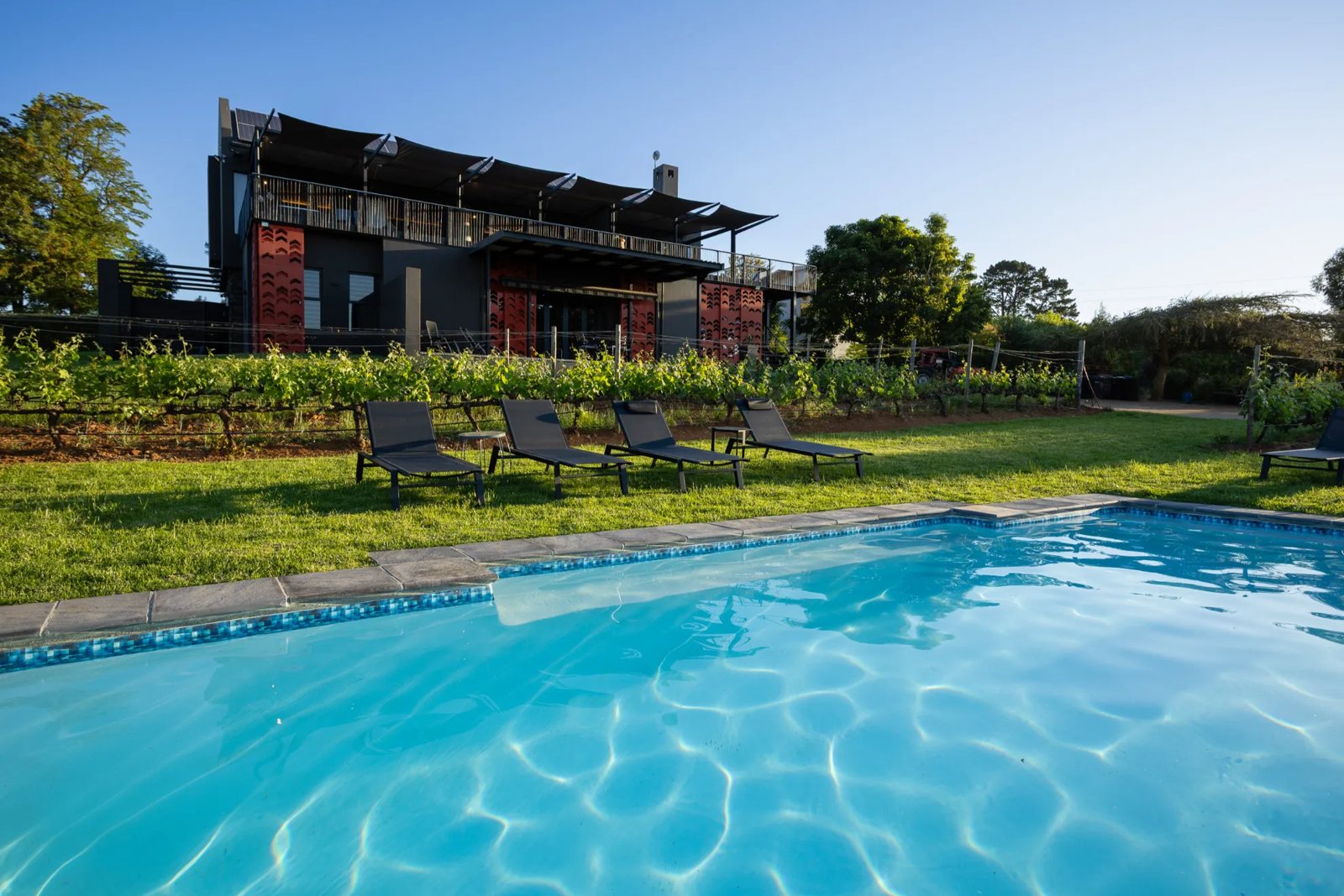
Kunjani Wines (also styled Kunjani Villas & Wines) is a boutique Stellenbosch wine estate in the Bottelary Hills near Devonvale, founded by Paul Barth and Pia Watermeyer.
Romantic Tasting Stay

Stellenbosch
Stellenbosch
KidsViewsWheelchair access Tasting Restaurant Stay
Stellenbosch
KidsRomanticWheelchair access Tasting Restaurant Stay
Stellenbosch
Stellenbosch
Stellenbosch
Stellenbosch
Stellenbosch